Tree Removal in Bathurst
We provide dependable tree services across Bathurst and surrounding areas to keep properties safe and well-maintained. Our team delivers clear advice and fast support.
Nature's Symphony
Request a call back
Thank you for contacting Agile Arbor Pty Limited.
We will get back to you as soon as possible.
Please try again later.
Clear Dead, Damaged Trees
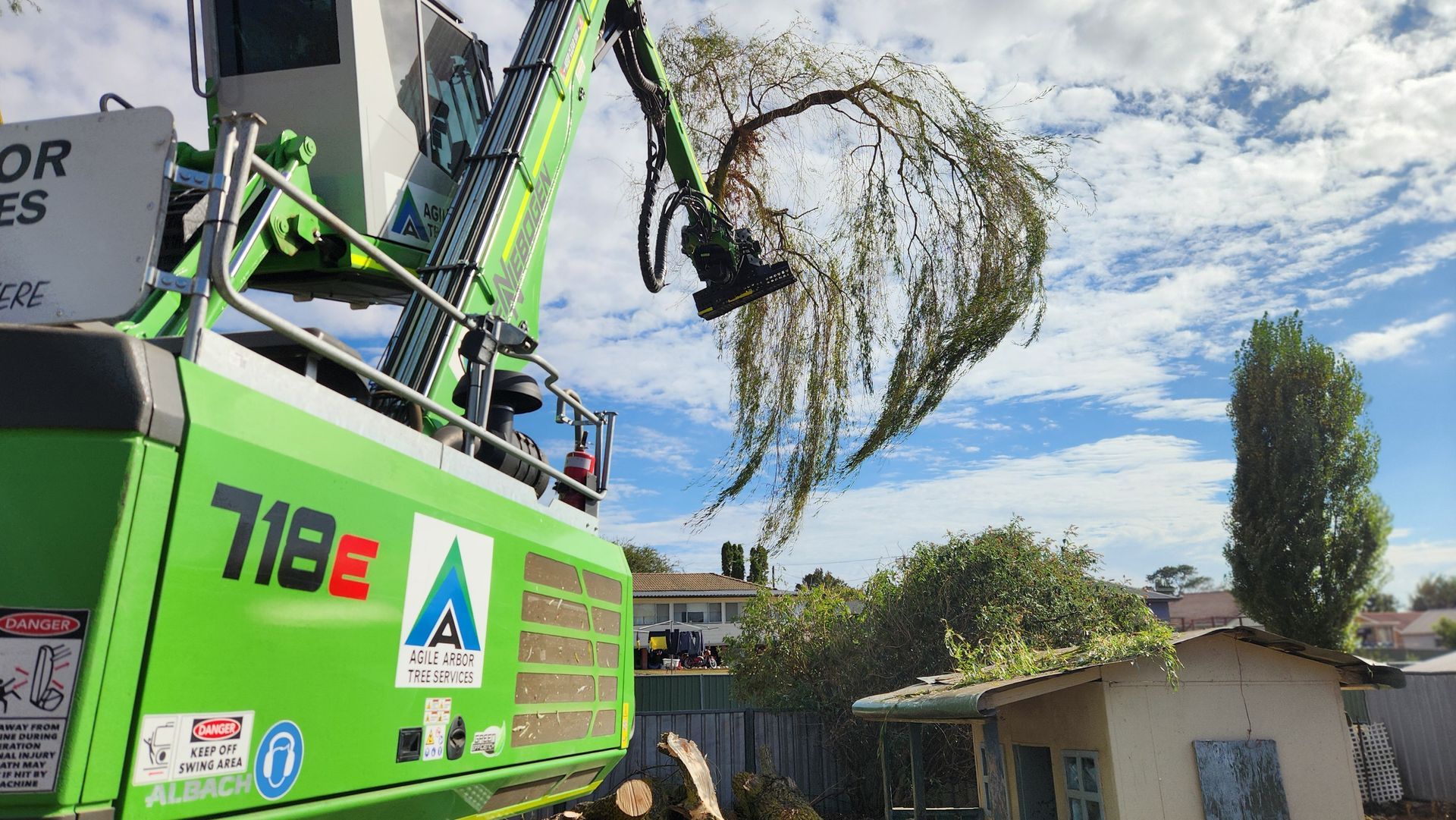
Whether you need a tree removed or your land cleared, our arborists have the tools and know-how to get the job done. We’ll visit your property for an onsite consultation to discuss the most efficient approach to safely clear your unwanted trees. If you’re unsure what trees are putting your property at risk, we’ll carry out a thorough risk assessment.
Want to keep as much natural vegetation as possible? No problem! At Agile Arbor Tree Services, we can effectively identify diseased and unsafe trees with expert advice to get them into healthy condition and thriving. We offer tree removal, pruning, stump grinding and land clearing services for homes, commercial properties and government projects. Our team can travel throughout Bathurst, Blue Mountains, Orange, Lithgow, Blayney and Oberon.
Thorough assessments for tree safety concerns
Clear removal plans for unwanted vegetation
Reasons for Tree Removal
With more than 20 years’ experience in tree removal and revegetation, we specialise in clearing unsafe trees and waste from rough terrains for homes, as well as commercial and government projects. There are a number of reasons to remove trees and vegetation from your land. Here are just a few of them:
- Dead and decaying trees can carry contagious infestations that can spread to other plants, vegetation, and trees.
- Trees leaning in a dangerous direction can pose a risk to your home, driveway, or other assets
- You may wish to remove trees for a landscaping project
- A tree may become overgrown rapidly in certain settings
- Trees can pose significant storm damage risks in certain areas
Our arborists have a sound knowledge of native and introduced tree species. They can promptly distinguish between trees that are sick and those that can be saved if you wish. We travel throughout Bathurst and the NSW region for onsite consultations and tree safety checks.
FAQ
What signs indicate a tree has become unsafe to keep on a property?
Several visual and structural clues can suggest a tree is no longer stable or healthy enough to remain on a property. Large cracks in the trunk, hollow sections, fungal growth at the base and significant lean can all signal internal decay or weakened root systems. Branch dieback in the upper canopy may also indicate a failing tree that could shed limbs unexpectedly. In many regional areas, changes in soil conditions, drought stress or pest infestations can accelerate decline. A formal risk assessment can identify whether a tree presents a falling hazard or poses a threat during storms, especially when located near homes, driveways or high traffic areas.
How can I tell the difference between a sick tree and one that can still recover?
Distinguishing between a tree that is declining and one that can be rehabilitated requires close observation of its growth patterns, branch structure and root health. Trees that still produce new foliage, maintain even canopy colouring and show strong bud formation often have the potential to recover with targeted pruning or soil improvement. By contrast, trees with widespread dieback, peeling bark, fungal bodies or large areas of decay may be too compromised to restore. Species also respond differently to damage, so understanding whether a tree is native or introduced can help predict its resilience and long term outlook.
What should I do immediately after a tree falls during a storm?
Safety should be the first priority. Fallen trees may be hiding structural hazards such as tensioned branches that can spring unexpectedly or powerlines that have become snagged beneath debris. Approaching or attempting to move a fallen tree can result in serious injury. The safest action is to keep clear of the area, secure pets and children, and visually check for signs of electrical damage from a distance. Emergency arborist crews can then assess the situation, isolate risks and remove the tree using specialised equipment designed for unstable conditions. Documenting the damage for insurance purposes is also recommended before cleanup begins.